Prey Review

Prey Review

The First 15

Right away I have to say that the start screen music is perfect.

First I have to choose my gender. I’m male so I choose male. It’s the year 2032.

I leave my apartment and get onto a helicopter. The city looks really good. I can see the mix of new buildings along with “old” 2017 buildings. I arrive at the company headquarters and am greeted by a science probe which informs me that my brother is waiting for me.

I go through a series of very basic tests. The scientists are making this out to be some kind of huge deal, but I can’t figure out why. After the third test the scientist gets attacked by some kind of alien creature.

I wake up the next morning and find that things aren’t quite right. For instance, the hallway doesn’t go where it normally did. I grab a wrench and use it break the glass windows of my apartment so that I can escape…

…and walk out onto a soundstage. What the hell is going on?

Story

Several decades ago astronauts encountered the Typhon. The Typhon are an alien species with an unknown origin. America and Russia team up in secret to build a space station where scientists began studying the Typhon. Eventually they develop a device called a neuromod. A neuromod can teach a person any skill in a matter of seconds by remapping a person’s brain as if they had actually learned the skill.

Of course, everything eventually goes horribly wrong. The Typhon break containment and begin killing the people on the station while simultaneously growing some kind of weave, purpose unknown.

The story for Prey is as shallow or deep as you want it to be. A lot of the story is about the Typhon running amuck and trying to decide how to handle it. This mostly involves a lot of shooting things until they die. But there’s a deeper undercurrent that talks about memory, identity, and what it means to be an individual. There are choices that have to be made and repercussions for each decision. Players can dive into this or choose to ignore it as they wish.

Interface and Controls

You can set weapons to left, right, and down on the D-Pad to quickly swap between them which is nice. Up is reserved for the flashlight, which you almost never use. I wish the game allowed you to set a weapon to up as well.

The inventory has a number of issues that should be simple to fix (which leaves one to wonder why they weren’t fixed before release). These issues mostly arise when the player’s inventory is nearly full. The first issue is that items which should stack, don’t always stack when they enter the inventory. A single push of a button sorts them into a single stack, but having to go into the inventory, sort it, and exit out every time the player collects another item which fills their inventory gets annoying. The other issue is that if the player tries to pick up a weapon which takes up more than one inventory slot, the game will claim the player’s inventory is full even if the player has enough room but doesn’t have enough open inventory blocks that are side by side. Again, going into the inventory, sorting, and exiting out will fix the problem, but it’s bad design that such a thing is even necessary. Simply put, the inventory needs to auto-stack items that enter the player’s inventory, and if necessary auto-sort to fit larger items such as weapons.

I had a lot of trouble figuring out where I needed to go for some of the objectives. A few times I would follow a quest marker only to realize that it was just leading me to another area of the ship entirely. Other quests simply didn’t have a quest marker and reading the quest text still didn’t tell me where to go. The quest indicator should be another color if it’s in a different area of the station, and another QC pass on the quest text would have been nice.

I ran into an issue during spacewalks where it was next to impossible to track points of interest. The green dots would appear, but the only way that I could get the labels for these dots was to turn off all primary and secondary objective markers. The developers need to make it so that the labels will appear around all markers in the direction you are looking rather than one at a time.

Gameplay

The best part about Prey is how the game rewards the player for exploring. There is the primary objective and several secondary objectives, but a lot of the best gameplay is when players try poking their heads in nearby rooms, exploring down unknown corridors, or sometimes even just visiting entirely different sections of the ship. Unlike a lot of games that only let players go a little ways off the beaten path, Prey lets players explore for hours if they so choose in whatever direction they want. Some areas can only be accessed by progressing the story of course, but by and large the station is one giant playground to explore.

One of the core concepts of the game is the neuromods. Neuromods allow the player to learn new skills to fight better, hack doors, repair broken systems on the station, and a myriad of other things. I was particularly impressed with how I found every potential upgrade worth taking. At the start I wanted them all. And that was before the game doubled the amount that I had available to me. Mostly the player has to find neuromods, but they can also be constructed, up to a point. Once the player tries to make too many, the game locks them out and requires the player to go on a sidequest to unlock them again. I enjoyed how completing that sidequest became the most important goal to me even over the primary objective.

Eventually the player finds a scanner with which to scan the Typhon. Doing so unlocks new Typhon abilities that the player can learn. These include every ability the Typhon know such as mimicing objects, hurling fireballs, mind controlling people, and more. The ability to mimic objects was particularly interested because it allows the player to enter areas that normally are inaccessible. It takes a big mental shift to consider that the way past a locked door is to transform into a coffee cup and roll in through the mail slot.

The concept of the Mimic enemy is very cool. Mimics will (as the name suggests) mimic another nearby object and lie in wait. When the player gets too close the creature will drop the disguise and attack. This creates a lot of tension and leads to some interesting gameplay moments. When players first explore an area, they have to keep an eye out for duplicate items (one of which could be a mimic). And if they ever go back through an area, they must be wary of anything that wasn’t there before.

Turrets add another interesting element to the game. When I found my first turret I felt like I’d found my savior. I would carry it around with me while I explored the lobby and let it do the shooting since I had a very hard time hitting the fast moving mimics with my pistol (and the turret has unlimited ammo). Each time I walked in front of it, the turret would scan me and declare me free of Typhon material. It wasn’t until later that I realized why this was so important. If you choose to install Typhon neuromods, the turrets will start to attack you on sight. In this way they go from being a savior, to being another enemy. I found it to be a very interesting role reversal.

I especially liked the way the game handles spacewalks. I sometimes got turned around, and upside down, but it felt like a “natural” part of floating in space. The controls felt intuitive despite the lack of up and down.

The GLOO Cannon is Prey’s equivalent to Half-Life’s gravity gun. The GLOO Cannon does serve a purpose in combat, but its real use is for climbing walls and putting out fires. It gives the player a freedom of movement that takes a while to fully comprehend. Areas that at first appear flat hide a verticality that takes some getting used to. The game does a good job of showcasing what you can do with the weapon to get players started.

Another interesting weapon is the Q-Beam. The Q-Beam does reverse damage. This means that rather than lower the enemy’s health like most weapons, it begins to fill the enemy’s health bar from left to right. Once it fills the enemy’s health bar completely, the enemy disintegrates into its base elements that the player can collect. Since the beam only has to reach the enemy’s current health, players can combo other weapons with the Q-Beam if needed. My only complaint about this weapon is that the energy buildup decays very quickly. This makes it hard to use any other weapon after building up any kind of charge in an enemy. I would like to see the energy from the Q-Beam never decay once it applies to an enemy.

Grenades in this game are the worst weapon to try and use. Throwing a grenade is often times a study in futility. Without some kind of trajectory indicator it’s hard to tell where the grenade will go. Sometimes it doesn’t go far enough or it goes too far and misses the intended targets. Other times it bounces off something that the player might not even realize is in the way. This actually killed me when a grenade I threw bounced off a box and landed right underneath me before going off (though I did get an achievement for it). I would like to see the developers add in a system that shows the player the trajectory of the grenade before it gets thrown.

Then there’s the shotgun. The shotgun is by far the strongest weapon in the game and pretty much renders the others obsolete. The problem is that even with such a powerful weapon I still found myself crafting tons of ammo for it so it was actually fairly well balanced. But it highlights that the other weapons just aren’t good enough to keep up with the enemies of the game. I would like to see the designers boost the strength of the other weapons a bit rather than nerf the one gun that seems to really work. Also, it would be nice if players could upgrade the wrench to make it a more viable option rather than that thing players have to use when they run out of ammo.

The game allows players to equip chip mods which give various passive effects. I like the chip system, but one chip specifically I do not like. One of the chips allows players to detect Mimics while they are hiding as other objects. I feel like this removes a major element of the game and cheapens the experience. On the plus side, the chip does not work on Greater Mimics, but I still feel that it should be removed from the game.

Conclusion

You will like this game if you enjoy a game that rewards exploration and has more than a few jump scares.

You will not like this game if you want a more linear experience or if you strongly dislike jump scares. The game has some sense of horror to it, but after a while you get used to the Typhon.

I enjoyed this game mostly for the freedom it gave me in exploring the station. The combat is interesting and I felt challenged even on Normal difficulty. The Typhon abilities are also a nice touch with mimic being the most unique.

Horizon Zero Dawn Review

Horizon Zero Dawn Review

The First 15

First comes a lot of cutscenes that cement my place as an outcast. I’m also getting a lot of shots of the wilderness which is admittedly quite beautiful.

It seems my name is Aloy (similar to alloy, which I doubt is a coincidence). One day while out and about as a child I manage to fall into a hole in the ground and find myself in a cavern that looks like the ruins of an old underground installation. I’m exploring the space while my character makes comments. It seems that this game takes place a great deal of time after the fall of human civilization.

I come across a room with a strange metal object inside, but I’m unable to get in due to the rocks in my way. Maybe I can find another way inside further in. I come across a dead body with something on its ear. I pick up the object and place it on mine. The object appears to be a computer complete with heads up display. I find it very interesting that I just ‘found’ my interface for the game.

I continue on and encounter a room with a bunch of recordings. After listening to them I believe I’ve encountered what I think is a group of people who planned on committing suicide. That’s not at all creepy considering I’m currently playing as a small child. At last I manage to make my way through the ruins and find my way back outside.

Story

Horizon Zero Dawn takes place many years after the fall of civilization. The only thing left behind from that civilization are old ruins and a nearly infinite number of machine creatures. The main character, Aloy, is raised as an outcast from a tribe of hunters but goes back to compete in a trial that allows her to become a member. But more important to her, if she wins then she can demand the leaders tell her who her mother is.

Despite some complications, Aloy leaves the lands of her tribe in search of answers. Unfortunately for her, those answers are quite dangerous and a number of people will stand against her. Of course, even when she does manage to find some answers they only seem to lead to more questions. And naturally, to find those answers Aloy must face even greater dangers.

I want to commend the writers for managing to keep the story feeling personal throughout. Even as the world and story continues to expand and grow, players remain rooted in the character who at times really could not care less about some of the things she discovers. She has her own goals and despite the worldwide implications of what she finds her search remains personal.

Something I found particularly impressive was the way in which the writers handled religion within Aloy’s tribe. The tribesmen would pray to the AllMother which could have felt awkward or pathetic, but the writers never made the people feel obnoxious or naive for believing as they do. In fact, a few moments even manage to highlight the beauty of their religion and its ceremonies. In our world where, more and more, people tend to make fun of other people’s religion, it’s nice to see a story treat even a fake religion with such reverence.

There exists a unique dichotomy between the world aboveground of the wilds and the world belowground of the ‘world of metal’ as Aloy calls it. Going from one to the other is both jarring and completely natural. You can see how each has influenced the other even though both worlds stand very much in opposition. Unfortunately the story doesn’t explore this ying-yang relationship as much as I would have liked.

Interface and Controls

I alluded to this earlier, but the way in which players acquire the game’s interface rather than have it available to them from the start is quite unique. I like the way in which they did this, though I think they could have done more with it. Since the interface is a part of the game, I would have liked to see players be able to collect different visual overlays for the interface. For instance, players could unlock a futuristic overlay, or maybe one which makes gives the effect of being constructed using watercolors. The interface would still function exactly the same regardless of which overlay is used, but the option to make custom alterations to the look would have been nice.

Your spear vanishes whenever the character sheathes it on her back. I realize it’s a bug, but it’s extremely noticeable and damages the sense of immersion to see it constantly appear and disappear.

There are several different types of quests. One of those is tutorial quests. Tutorial quests become available whenever you unlock/acquire a new weapon. They’re a great way of getting the player to try out a new weapon. The one problem with them is that they won’t progress unless they are set as the active quest. So even if you use the new weapon in the correct way to complete the tutorial quest, it won’t update until you set it to be the active quest and do it again.

Photo Mode is something I completely wasn’t expecting, but which I now wish every game had. In short, whenever you pause the game you can enter Photo Mode. In Photo Mode, the game remains paused but now you can manipulate the camera to zoom in, zoom out, or change the angle the camera is looking at the main character. There are also a wide selection of filters and effects you can apply to the camera. Then, once you’ve got everything set, you can take a screenshot. The result is some absolutely incredible shots that truly feel epic and can help capture moments from your journey.

Easily the worst part of Horizon Zero Dawn is dealing with the camera during battle. Since there is no way of locking onto a target, you must manually rotate the camera in order to keep an enemy in view. This is especially annoying since several enemies will charge at you (and then past you when you dodge out of the way). This also leads to a lot of getting hit by enemies from offscreen. I would like for there to be a way in which you could lock onto a target and have the camera automatically follow that target. For the controls, the designers could remap L1 to be target lock/unlock, and have the touchpad on the PS4 controller bring up the weapon wheel.

The other annoyance with the camera occurs when aiming at things in the sky (such as flying machines). The camera is positioned a little behind the character, which means that if you are crouching or standing in tall vegetation when aiming up the plants will obscure the camera even though the vegetation is not between Aloy’s eyes and the target. The game needs to fade out any objects that are between the camera and Aloy.

Items are rather annoying to use since you have to cycle through them all one at a time using left and right on the D-pad and then press down to activate the one currently selected. Instead, I would prefer if you could assign an item to left, right, and down the same way in which weapons are assigned to the weapon wheel. Players would also have the option of activating an item from within the inventory menu as well.

Gameplay

I like that one of the first things you can do once you gain the ability to move around freely is revisit the cavern which you fell into as a young child. Now that you’re older you have the strength to break through some of the rocks that previously barred your way into certain areas. It created a nice dynamic to see an area both before and after so close to one another.

Combat in Horizon Zero Dawn is about a lot more than simply unloading damage into an enemy machine. Instead, every machine has different weak points that can be targeted. And each of these weak points needs to be targeted in a different way. For instance, if a machine has a canister of blaze (essentially fuel) on it, then hitting that canister with a fire arrow will cause the canister to explode. On weaker machines that might be enough to destroy it, and on other machines being on fire might reveal previously hidden weaknesses for players to exploit. Some enemies can even have their weapons removed and turned against them if players can manage to pick them up. Boss battles tend to take this system to the limit and require the exploitation of these weaknesses in order to defeat. This system of strategic dismemberment makes for some extremely compelling gameplay and makes fighting the machines quite enjoyable.

The development team did a fantastic job on their climbing system. Climbing along surfaces feels very fluid and near effortless. My only complaint is that the actual climbing areas are all rather simplistic. I would have liked to see a bit more complexity involved with areas you climb around on.

Early on you come across a merchant (and all merchants after him) who will sell you maps that show you where all of the important collectibles can be located.  The maps themselves only show you a general location and it is still up to you to snoop around to find the item. I really like this idea of introducing such maps near the start of the game rather than at the end

The fast travel system is a little awkward. Traveling itself is fine, but each time you travel you must consume a fast travel pack to do so. What makes this feel weird is you end up having an almost limitless supply of fast travel packs as you play through the game. Eventually you can even buy a fast travel pack that truly is infinite. I always felt like the travel packs served no purpose other than to take up inventory space. I would like to see the designers remove the need for these packs from the game altogether.

In this game the cauldrons act as dungeons. At first glance they all seem the same, but each has its own setup that makes it feel unique. And as with any good dungeon there is a boss fight at the end. Cauldrons do a great job of both reminding players of the metal world hidden beneath the surface as well as taking what is mostly an open world game and for a while narrowing the focus down to one room at a time.

Players can compete in trials that earn them marks for completing the trial within a certain amount of time. Each trial has three rankings depending on how fast you finish it. The problem with hunter marks is that they are only useful once you’ve visited all of the sites and completed all of the trials. Rather than have bronze, silver, and gold rankings for each trial, I would prefer it if each of the trials only had a single pass/fail ranking and the Hunter’s Lodge handed out rewards for completing 5, 10, and finally all 15 of the trials instead.

As you go through the game you find merchants who will sell you more and more powerful weapons. Often times you can even skip straight from the normal version to the most powerful shadow version. In a game that has you gathering so many different resources, it feels odd to simply buy better weapons rather than acquiring a base model for a weapon and having to craft upgrades onto it until it becomes the most powerful version. I would have liked to see them add in a crafting system for weapons where possibly players would acquire designs and then have to collect the necessary resources to construct the design. Each weapon would have a basic design, and then be upgradeable using upgrade components. The designs for these upgrade components could be bought from merchants with each upgrade component affecting several different weapons. For instance, a bowstring upgrade component could be applied to either of the bows available. I also dislike that you cannot upgrade your spear with the exception of a single side quest.

One nice quality of life feature in this game that I hope to see in more games is that whenever you have to follow other characters they will move at your speed. So if you walk, then they will walk. If you start to run, then they will run as well. This gave me the ability to slow down if I wanted to listen to a conversation and speed up if I wanted to get things moving along.

Treasure boxes hold an odd place in the game. These boxes can be found in various places, or handed out after completing a mission. Opening the box reveals the contents which players can remove and their inventory. I believe this was the developers’ way of ensuring that players always got their rewards even if they did not have any inventory space. And, every time players encounter a new merchant, the merchant ‘sells’ players a free treasure box with some common resources inside. There is no limit to the number of boxes the player can hold. As a result, this led me to often times hold onto a box and leave the contents inside since it allowed me to hold onto more resources than my inventory would usually allow. In essence, the boxes became a sort of pseudo second inventory. I like having the boxes be for rewards from completing missions, but I think the designers went too far with it when they allowed players to collect boxes from corpses and chests. I feel like they should have restricted them solely as objective rewards.

Conclusion

You will like this game if you enjoy a good personal story and a unique way of thinking about combat. Both are compelling and will keep you interested all the way up until the end.

You will not like this game if you dislike combat with a lot of constant motion. You spend almost as much time dodging out of the way as you do firing arrows. Combat also requires a lot of very precise hits which can be difficult for some people especially on consoles.

Horizon Zero Dawn is a very enjoyable game with a strong story and a unique take on combat. Thinking about enemies as a series of different parts rather than simply a target to unload damage into gives each machine a truly unique feel to it. I very much enjoyed this game and I believe others will as well.

Pokemon Sun & Moon

Pokemon Sun & Moon

Introduction

When I was younger I played a lot of Pokémon. I bought Pokémon Red when it first came out and later bought Pokémon Yellow. I managed to get all 151 Pokémon (including Mew). I then continued on with Pokémon Silver, but stopped playing before the next entry into the series. Now I felt like it was time to jump back into the series and see if it was everything I remember it to be.

The First 15

I start up the game and am asked to pick my character. I’m a little disappointed by how few choices you have when it comes to making your character.

The opening cutscene shows a young girl trying to escape from a lab. She nearly gets caught before whatever pokémon she has in her bag teleports them out of the lab.

Now we’ve moved on to my character who it seems has just moved to the Alola area. I’m starting to notice that people all smile a lot.

I find it a little weird that even the professor calls my mom ‘mom’.

After a lot of cutscenes I finally get to chose my starter pokémon. I chose Litten the fire cat as my starter. My reason is that it looks the coolest of the three.

Now equipped with my starter I’m ready to go!

Story

There is a decided lack of tension between characters in the game. Everyone remembers the constant tension between Red and Blue (Ash and Gary) from the first game. But in this game it seems like everyone is always friendly. I feel like the lack of a rival does the game a disservice. It by no means ruins the story, but I think the story could be better if there was a character that acted as a true rival for the player.

In Alola, Team Rocket is replaced by a gang called Team Skull. Unfortunately, whereas Team Rocket managed to actually feel like a real threat and defeating them became a priority, the members of Team Skull are mostly characters who are very clearly trying to compensate for being weak by acting tough. This makes defeating them feel less like something you need to do, and more like something that you might as well do since you’re already here. Even their leader is hard to take seriously. I remember Giovani being someone you could respect (granted I was a lot younger at the time). Unfortunately this new group does not elicit the same response.

Interface and Controls

Players gain access to the Ride Pass which allows players to mount up on different pokémon. I like how this replaces the old HM system, but it feels a little odd to be able to just call up a pokémon anywhere I want without having first captured that pokémon. I think you should have to capture the pokémon you use on the Ride Pass. I’m also not of fan of how Sharpedo completely replaces Lapras. Technically you can’t fish while using Sharpedo whereas you can with Lapras, but this just feels like the developers last minute realized Lapras was useless and so they removed something from Sharpedo to make Lapras feel ‘different.’ I’d like to see them give Sharpedo the ability to be fished from and then simply remove Lapras as a mount.

I wish the game had a quest log or a notebook of some kind for tracking quests you get from NPCs. Often times I’ll meet an NPC who wants me to do something for them or trade a pokémon with them. The problem is that if I don’t do it right away, I usually forget about the quest until I revisit the area later on.

One of the biggest missteps the game takes is with the Battle Royale. Players are introduced to the Battle Royale through the story at about level 20. Players participate in one which is a lot of fun. Naturally players are going to want to do a few more before they continue on with the story. Unfortunately, pokémon who participate in the event are all level 50. Pokémon over that level are set at level 50, but pokémon under that level are not leveled up to 50. This basically means that the player, having just been introduced to this new system, has to immediately leave and come back much later in the game to participate. I really wish there were Battle Royales available at level 20 so the player could participate immediately upon being introduced to the system. I would have liked to see the developers add in a series of one-time level 20 battles that reward the player with an item and unlock the normal level 50 battles upon completion.

One of the things that made the game much harder than it should have been is after defeating a pokémon that belongs to a trainer, the game tells you what pokémon they will be playing next. Unfortunately, all it tells you is the name of that pokémon. As someone who hasn’t memorized all 700+ pokémon I usually had no idea which pokémon was about to be summoned next. I would like to see the new pokémon displayed in the bottom screen along with its type(s).

I appreciate that when I’m selecting a move the game will indicated if an attack is super-effective, normal, not very effective, or will have no effect on the opposing pokémon. This is extremely helpful since it means I don’t have to try and memorize a giant strength/weakness chart.

I actually didn’t even realize that I had access to Pokémon Pelago until a random NPC I spoke with told me about it. There needs to be some sort of tutorial added that takes players there once they unlock access.

Gameplay

Early on enemies have a habit of overusing debuff moves which ultimately means they never do any damage. I think it’s intentional in order to make at least the start of the game really easy for new players. This is a great way of giving players enemies with pokémon that are the same level but are still very easy since the player could have chosen any of the three starters.

The game gives you access to the Exp Share item very early. Personally I feel like this is one of the best decisions the game makes. By having the Exp Share all of the pokémon in the player’s party are constantly leveling. This makes it so you don’t have to spend time farming experience or constantly swapping pokémon at the start of every battle if some of your pokémon start falling behind. The early access to Exp Share means you can always use the pokémon you want to use, but the others in your party will be strong enough when the time comes for them to shine.

In the old days (Pokémon Silver) pokémon would full heal when they leveled up. They don’t do that anymore, which is probably for the best.

The game strikes a nice balance between random encounters and avoidable encounters. Walking in tall grass or inside of caves causes the player to encounter pokémon at random, while others can be seen spotted beforehand. I like the mix of encounter types and how they made each area feel unique.

Replacing dungeons are the Island Challenges. These challenges require you to navigate through an area, usually a cave, while completing some kind of quest which then ends with a fight against a totem pokémon (basically a supped up version of a normal pokémon). While fun, the challenges tended to be quite easy and the fights with the totem pokémon were also quite easy if I burst down the totem pokémon right away. I like that they’re trying to change things up, but their one-hit KO methodology prevents things from being as interesting as they could be (more on that below).

My largest complaint about the game is that most of the fights come down to one-hit knock outs. Because of how much damage pokémon deal at a time, hitting an enemy pokémon with a super-effective attack will usually KO that pokémon (or vice versa) without giving the target a chance to do anything. There were a number of times when I would put out a pokémon of my own only to have it get knocked out without being able to attack even once. Because of this I found the majority of the game to be rather easy since I could stick my Butterfree out first which usually had at least one attack that was super-effective against anything the game threw at me. And if it doesn’t, then I could just switch to one of my other pokémon who did have a super-effective attack. I would have liked to see fights be a little more of an actual fight. That means that even a high damage super-effective attack wouldn’t do more than one-third to one-half of a pokémon’s health. I just feel as if the constant one-shotting makes the main part of the game too easy and a couple select fights much harder than they needed to be.

The first time I was defeated it was to a trainer who played a Meowth that used Bite. Bite is a move that has a chance to make the opposing pokémon flinch, thus skipping their turn if the opponent goes second. Unfortunately for me, the enemy was faster and proceeded to make my pokémon flinch every turn until eventually they all fainted without being able to attack even once. Losing purely to RNG like this felt so completely awful. A feeling that just got worse when I went in again and defeated her without any trouble the second time. I feel like the designers need to be a little more careful not to give enemies moves like Bite which can potentially cause the player to lose without being given a chance to do anything due to bad RNG.

Z-Power is a new mechanic which allows players (and very rarely enemies) to supercharge a single attack once per fight. I actually found Z-moves to be a bit underwhelming from a gameplay perspective since they’re mostly just a more powerful version of an existing ability. It’s a good attempt to try and follow up on Mega Evolutions, but it just doesn’t have the same effect. Z-moves also tended to make wild encounters even easier than they already were since a Z-move is almost always going to one-shot the target even if it isn’t super-effective. The upside to Z-moves are the animations that play when players use one. Some pokémon have unique Z-moves which generally have some of the best animations.

Mega Evolving is a system from the more recent games. In Pokémon Sun/Moon players aren’t given access to it until after the main storyline is already completed. I feel like this is done to further highlight the new Z-Power mechanic.

Something I want to highlight about Pokémon Sun/Moon is that players can spend an almost unlimited number of hours playing this game. Even once you beat the main storyline there are several other storylines that follow it. Besides story content there is the collection aspect. Players can catch pokémon to fill up their pokédex. And once that’s completed then players can try to collect the rare shiny variation of each pokémon. Between that, breeding and hatching eggs, online battles, and a number of other gameplay features players can easily pour hundreds (maybe even thousands) of hours into this game.

Conclusion

You will like this game if you enjoy collecting a seemingly limitless number of creatures, training them, and taking them into battle against enemy trainers or players.

You will not like this game if you don’t know many of the pokémon by name or you dislike games that have an over the top cheerful atmosphere.

Pokémon is (as it always has been) the ultimate collector’s game. With over 700 pokémon (over 300 catchable between the two games in the current expansion) players have plenty of things to chase after. But even for those who aren’t into filling up their pokédex, the game is still a lot of fun with an engaging story. There are a few missteps such as Team Skull lacking a sense of danger and the constant one-hit KO attacks, but all in all I enjoyed my time playing this game.

Dishonored 2 Review

Dishonored 2 Review

The First 15

I boot up the game and have to install the day 1 patch. It’s 9 GB! The game is 37 GB total. I just had to download a quarter of the game, which took hours. Whatever happened to games being ready out of the box?

Once I finally start up the game it asks if I want to go through the tutorial. I decide I do and the game has me playing as Emily as Corvo runs her through an obstacle course. The tutorial is short and rather effective. I think I’m ready for the main game. I choose Medium difficulty.

The story starts out all smiles and rainbows but very suddenly turns into blood and death.

You have to choose whether to play as Corvo Attano, the main character of the first game, or Emily Kaldwin, the ruler of Dunwald. I chose to play as Emily Kaldwin.

Something I remember from playing the first game is that there was a method in which you could play through the game without killing anyone. I check through the trophies (playing on PS4) and sure enough there is one for not killing anyone. There’s also one for never being spotted. I decide to do a stealth, no-killing playthrough.

It actually took me a rather long time to figure out that I could escape the room they locked me in by opening the window and walking along the balcony. This early on it would be nice if the game did a little more to make me aware that windows even can be opened.

Now out I get my first chance to deal with an enemy. I sneak up behind him and choke him unconscious. Easy enough. I sneak downstairs and do the same to the next guy.

Next there are three guys with one of them boasting about what’s happened. I kind of want to kill them, but I’m doing a no-kill playthrough. Eventually the one boasting walks towards me so I hide around the corner. Once his back is turned I sneak up and choke him unconscious. Now I get back my ring so that I can use the secret exit.

At this point the game tells me that I can fulfil the requirement of ‘neutralizing’ the man I just choked out by either killing him, or by locking him inside of the hidden room. I carry him into the room and Emily makes a wicked comment about how she hopes he enjoys being surrounded by wealth but unable to use any of it since he is completely locked inside. This was so much better than killing him.

Now I exit the room and continue on with the game.

Story

The overall story is a little too formulaic. Everything starts out as rainbows and butterflies until the evil relative comes in and starts killing the nobility. She then uses her magic to turn whichever character you’re not playing as into stone. From there the main character is forced to flee and sets out on a quest to retake the throne. This sort of story has been done before many times, and sadly Dishonored 2 doesn’t do anything to help set itself apart. There aren’t that many characters and even the characters that do exist don’t seem to interact very much.

Everything you do is for the “good of Dunwald” or its people. But frankly, I never really saw any people worth retaking the throne for. Where are the people who make me want to save them? Everyone I meet (soldiers and civilians) is either selfish or just plain evil. All of the quests (even the optional ones) are about getting someone something they want in exchange for something I want. Where are the characters who just want a safe place to sleep? Where are the mini-storylines where a frightened child asks me to save her family only for me to arrive too late? Where are the people for whom all I can do is give them one of my healing potions and have to apologize that I don’t have the power to do more for them? Emily keeps going on and on about how she always wished she could be free from the throne. Well now she is. But she insists that she has to retake the throne despite the fact that I never really meet anyone who I feel is worth retaking the throne for.

For the sake of keeping the game going the storyline works. But it stops at being just “good enough” and relies on the gameplay to carry the majority of the game.

Interface and Controls

There is no indicator when you go to pick something up that your actions will be seen as theft. You only get find out it’s theft when all of a sudden a civilian runs away screaming and/or the guards show up and try to kill you.

The game kept giving me tips about ways in which I could use certain abilities. It especially liked to tell me about possession. It took me a bit to realize that possession is unique to Corvo whereas I was playing as Emily. The game should only show tips for abilities that your current character can use.

I disliked that I always had to have the sword equipped. While doing a no-kill playthrough, the sword was only useful for killing bloodflies or breaking boards. But every time I went to cast Dark Vision or do anything else I had to pull out my sword. This is more of a roleplaying feature, but I would like it if equipping an item to my left hand or using magic didn’t automatically pull out my sword.

Spending mana is odd. Some abilities cost mana, but then that mana regenerates provided you don’t try to use another power before it’s done regenerating. Others cost some mana and regenerate some, while others cost mana and don’t regenerate any mana at all. None of the abilities warn you about the cost, so you mostly just have to learn by using them. Though in the end mana starts to feel pointless since you almost never spend it fast enough. I played through most of the game holding 10 mana vials (the most you can hold) and only ever used them if I found another mana vial and wasn’t already at max mana (which wasn’t that often). I would have liked to see the designers be a little more creative with their resource system.

When playing as Emily Kaldwin, she has an ability that allows her to teleport a fair distance. One of the upgrades allows her to instead teleport objects and enemies to her. This can be useful for grabbing hard to reach items or pulling an enemy into a chokehold. But since both versions of the ability are tied together and the ability auto-adjusts based on what you’re targeting, I would occasionally pull something to me (like a corpse) when I meant to jump behind an enemy. The pull is considered non-stealthy and so it would cause nearby enemies to spot me. I would have liked to see these two abilities be actual separate abilities.

I dislike that you can’t sell things to merchants. I spent most of the game with a full supply of various grenades and other traps that I’m never going to use because they are lethal and I was doing a non-lethal playthrough. I also spent most of the game with ten health and mana potions since ten is the max you can hold and I never really needed them. This is probably more of a comment about the uselessness of some items during certain types of gameplay (in my case non-lethal stealth), but I explored a lot and ended just leaving behind a lot of what I found since I was already maxed out.

Gameplay

I chose to do a no-kill, no-alert playthrough and to play as Emily Kaldwin. This means that I can’t kill anyone (included bosses) and I can’t be spotted (so I have to use stealth). This meant a lot of saving and loading when things didn’t go quite the way I wanted.

I want to commend the level designers on creating some absolutely superb levels to move around in. Very quickly you learn that there is always another way to get to where you want to go. Most of the time that means going up or down and jumping from balconies or crawling through alleyways. With the use of powers players can access even more areas. Also, not only are the levels beautifully laid out, but the attention to detail is superb. They clearly spent a lot of time placing odd bits and ends such as trash, benches, and other objects the exist solely to dress up the scene. Each level

One nice addition to the typical stealth formula is that guards will notice if other guards go missing. If a guard walks away and comes back to find a fellow missing, that guard will start investigating the area. Ironically this actually tends to make taking down the second guard easier since you don’t have to do anything to get him away from his normal patrol which allows you to sneak up and take him down too.

If you’re going for no-deaths or no-alerts playthrough you have to babysit it. Every time you go to save you have to check the stats page to make sure no one died or spotted you. Several times I’ve gone to check my stats only to find out that someone, somewhere, somehow died even though I never killed anyone. One time I managed to subdue all of the enemies between me and the end of the level. I checked the stats after subduing the last enemy, no alerts. I walked to the end of the level probably 100 feet away and somehow when the end of level stats page came up I had one alert. So I had to reload the save and walk that same 100 feet again, this time without any alerts. They really need to do a better job on this because it started to get really annoying when I had to check my stats every single time before I saved.

The AI cheats. What I mean by this is that the enemies will always walk in your general direction whenever they’re searching for you. It’s easy enough to test. Just bang on something to alert the enemies in the area, then go hide somewhere. No matter where you hide, the enemies will always path towards you without fail. I suspect the designers did this intentionally to try and create extra tension, but instead all it does is cause a break in the immersion of the game because you can literally see the game feeding the AI scripts controlling the enemies information about where you are that they shouldn’t have. They designed a good stealth system, but this kind of heavy handedness creates a negative play experience that cheapens their efforts and ultimately undermines the player’s sense of immersion.

Something I found very odd is that civilians are amazingly good at noticing the player. Guards gradually notice the player. The longer they see you or the more flashy your actions the sooner they realize what’s happening. But a civilian will go from uninterested to screaming in terror in a flash. Not only does this feel extremely odd that the guards are worse at spotting the player in stealth than the civilians, but it’s also annoying that there is no state between being hidden and being spotted for civilians. I would like to see civilians be given the same sort of gradual detection system that guards have.

There is a very noticeable lack of stealth oriented bone charms in the game. There are plenty of ones that help in combat, but I found a grand total of one bone charm that did anything for me while in stealth for the first half of the game. Even when I did find a few more they didn’t really do much besides make health and mana potions even more useless than they already were. I would have liked to see a bit more creativity and diversity with the bone charms.

One of the best parts about the original Dishonored game that makes a grand reappearance in Dishonored 2 is the ability to beat the game without killing anyone. This includes major story characters (aka bosses). Every major enemy has a way in which they can be defeated without killing them. Sometimes this causes the character to become friendly, other times one could argue the end result might actually be worse than killing them. But either way, it’s neat to really explore the level and discover alternate pathways to victory beside a straight up fight.

There is a “no-powers” mode which I did toy around with for a bit, but frankly I found it to be rather boring. When you chose to forgo the mark you don’t just give up your powers, you actually give up everything in the upgrade tree. Runes you collect now just give you a chunk of money instead. Powers are one of the best parts about the Dishonored series and without them the game feels like so much less. I’m not against them offering this as an option, but I feel like the designers did themselves a disservice by adding a trophy/achievement to beat the game using this mode. Doing so exposes how shallow their game becomes without them. I would like to see the “no-powers” option still lock the player out of using magic, but allows the player to earn passive abilities at a cost. For instance, maybe for every rune spent upgrading your character it lowered your maximum health, or caused you to take extra damage. Or maybe the runes cause you to glow which makes it easier for enemies to spot you. Either way, I feel like locking the player out of the entire upgrade tree was a mistake and they should have tried to find something of a middle ground.

Conclusion

You will like this game if you’re a fan of dark fantasy games which offer a fun arsenal of weapons and abilities. This game excels with its level design and also offers strong replayability though it’s different gameplay types.

You will not like this game is you are looking for a strong story or do not have much patience. There will be a lot of saving and reloading especially if you decide to try and complete the game without being spotted.

Dishonored 2 is a fun game. The level design is top notch and the arsenal of weapons and powers truly allows you to become the master of your environment. Unfortunately a weak story and a few design flaws prevent this game from truly becoming the masterpiece it’s trying to be. That said, I had a lot of fun with it and I think most people will too.

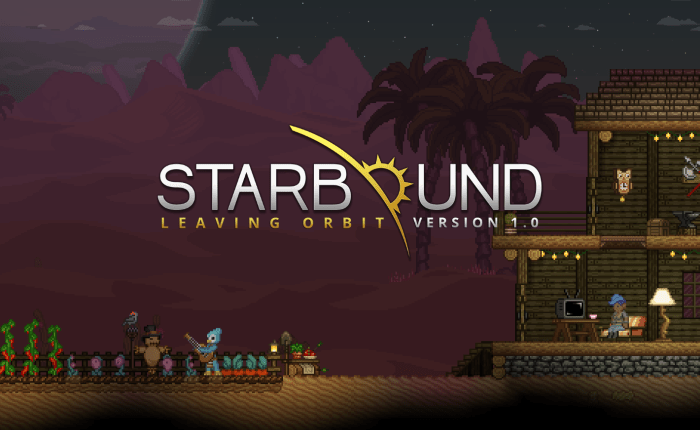
Starbound Review

Starbound Review

The First 15

I found the character creator to be simple and yet fun. There wasn’t much, but it got the job done and made me feel like the character was one I chose.

The available difficulties are Casual, Survivor, and Hardcore. I chose the Survivor difficulty.

I like how in the story you are already late right from the start. It reminds me of The Journeyman Project (ten points if you’ve even heard of that game).  It probably isn’t intentional, but it was a nice nostalgia trip for me.

You get the Matter Converter right away and start using it immediately. Even this early I can tell that most of the game will revolve around the Matter Converter.

Strangely enough, I just got this super advanced piece of technology (the Matter Converter) and the next thing I get is a…sword. Not a beam weapon, not a phase pistol, not even a normal gun, a sword. And, the sword I get isn’t some futuristic weapon. It’s a metal sword. And somehow, it’s the only weapon I find during my escape.  From a gameplay perspective it makes sense that you start with a melee weapon, but the sharp disconnect when it comes to the lore of the game makes this interaction feel forced. It might make more sense if I got a piece of metal I grabbed from the rubble to use as an improvised weapon, but instead someone from this super advanced society took the time to create a really crappy sword that I just happened to find. This could have been handled better.

I arrive on my spaceship and find there is a cat already aboard. It’s a small decision by the designers to include a silent companion, but it’s a nice touch and adds a bit more personality to the game. The other “character” is the computer AI who likes to make very sarcastic remarks. For instance, “There is a 32% chance this discovery is important and a 98% chance that you have nothing better to do than investigate.” So far, I like the cast of characters they’ve put together for me to “work” with.

The very first thing I did upon arriving at the planet was try digging a hole into the earth using the Matter Converter. I got a little ways down and found a cavern with some enemies who killed me in short order. Alright then.

And that seemed a fitting end to my first 15 minutes of playtime.

Story

The opening of the story certainly gave me a sense of having just barely managed to escape something horrendous. My problem with the story is that very quickly the game explains exactly what is happening and you get recruited to defeat the ‘great evil’. In a game that’s supposed to be all about exploration and experimentation it seems odd that they would simply hand you the whole story right from the start without any sort of effort. The story itself is intriguing, but I feel that it would be even better if players had to piece it together themselves by exploring the various planets.

Interface and Controls

One thing I found very strange is that, as far as I could find, there is no way to pause the game. Pressing ESC brings up the menu, but it doesn’t pause the game in the background even if I’m only playing single player. There are a million and one reasons players might need to get up from their computer, and not allowing them to pause the game seems like a poor decision. Especially given that on the hardest difficulty dying is permanent.

One big oversight with the game is that the game only saves when you quit. What this means is that if the game crashes (which I will mention never happened to me) or the power goes out (which did happen to me) then you lose all of your progress since the last time you started the game. Eventually I got into the habit of quitting to the main menu and then re-entering the game every hour or so just in case. The game loads very quickly, so this wasn’t a huge annoyance, but it still felt weird not to have some sort of auto-save feature.

You can’t skip cutscenes. I would think that by 2016 developers know better than to have 5+ minute cutscenes with no way to skip them, but it would seem not. This is even more odd given that you do have the option to skip the opening segment of the game.

Gameplay

Early on I found myself getting hurt a lot, which obviously was a problem. However, this became much less of a problem once I figured out how to craft health kits. It’s a smart idea on the part of the designers to give players early and easy access to basic health recovery. It incentivizes players to explore the crafting system without requiring it (since it is possible to get good enough you stop getting hurt). Players who tinker with crafting are ultimately rewarded with health packs for their efforts. This interaction is perfectly designed and represents how a game like this should unfurl.

The lack of an overview map is annoying and makes it difficult to navigate the planet at times, especially from inside the earth.

My biggest complaint with the game relates to exploration and how it interacts with the different difficulty options. Digging into the planet is a fun experience. You never know if you’re going to find a vein of rare minerals or maybe drop into a cavern filled with monsters and treasure. The problem comes when you’re done having fun and want to return to the surface. On Survivor difficulty you cannot return to your ship unless you are standing on the planet’s surface. Meaning that if you dig down into the planet, you then have to dig all the way back to the surface which takes ages compared to how quickly you can burrow down. Also, if you happen to die on Survivor difficulty you lose everything you’ve gathered. This penalty seems more than a little absurdly harsh. And on Hardcore mode when you die you stay dead. On the flip side there is Casual in which you lose nothing for dying and can warp back to the ship from anywhere, including inside the planet. I noticed that exploration became infinitely more enjoyable when I could explore somewhere for as long as I liked, and then warp back once I was done rather than having to slog my way back to the surface. And of course there’s the risk of dying when I dig up into a chamber and get crushed by an avalanche of bones (true story) at which point I lose everything I gathered if I’m playing on Survivor. My issue is that there exists such a huge disparity between Casual and the other two difficulties. You have to chose between exploration being almost too easy, or it being a massive pain. There should be a middle difficulty between Casual and Survivor in which dying still carries a penalty, but doesn’t make you want to quit playing altogether. And as for exploring, there should be a system in place (and available the moment you set foot on your first planet) that allows you to quickly return to your ship in exchange for some amount of resources (such as Core Fragments which are found near the center of most planets). Given how much of the game is about the joy of exploring, they make it surprisingly difficult to actually enjoy exploration.

One of the big upsides to this game is that it supports modding. While I did not use any of the mods available I did take a look through what was available. Many of these mods add an absolutely staggering number of new items to the game while others subtly (or not so subtly) change the rules. There are mods that do things like add the hunger system to Casual difficulty or make it so you don’t lose items on Survivor difficulty when you die (though you still lose money). It is possible that there may be other mods that address other issues I have with this game. That said, this review is for the base version of the game as envisioned by the developers.

Conclusion

You will like this game if you enjoy getting sidetracked by exploring previously undiscovered areas and tinkering with a wide variety of craftable items. You can also build your own buildings and decorate/upgrade your spaceship.

You will not like this game if you want a high action game or one that guides from one action point to the next. While this game does have a core storyline it does a lot of meandering along the way. Much of this game is about finding your own fun.

Starbound is a solid foundation for a game. That said, there are a number of gameplay decisions that make things feel more frustrating than fun. Fortunately, with the assistance of some mods, many of those issues can be addressed rather easily.

Thank you for reading my review and I hope it provided you some real insight into Starbound. Please feel free to leave any remarks in the comments section below.