Prey Review

Prey Review

The First 15

Right away I have to say that the start screen music is perfect.

First I have to choose my gender. I’m male so I choose male. It’s the year 2032.

I leave my apartment and get onto a helicopter. The city looks really good. I can see the mix of new buildings along with “old” 2017 buildings. I arrive at the company headquarters and am greeted by a science probe which informs me that my brother is waiting for me.

I go through a series of very basic tests. The scientists are making this out to be some kind of huge deal, but I can’t figure out why. After the third test the scientist gets attacked by some kind of alien creature.

I wake up the next morning and find that things aren’t quite right. For instance, the hallway doesn’t go where it normally did. I grab a wrench and use it break the glass windows of my apartment so that I can escape…

…and walk out onto a soundstage. What the hell is going on?

Story

Several decades ago astronauts encountered the Typhon. The Typhon are an alien species with an unknown origin. America and Russia team up in secret to build a space station where scientists began studying the Typhon. Eventually they develop a device called a neuromod. A neuromod can teach a person any skill in a matter of seconds by remapping a person’s brain as if they had actually learned the skill.

Of course, everything eventually goes horribly wrong. The Typhon break containment and begin killing the people on the station while simultaneously growing some kind of weave, purpose unknown.

The story for Prey is as shallow or deep as you want it to be. A lot of the story is about the Typhon running amuck and trying to decide how to handle it. This mostly involves a lot of shooting things until they die. But there’s a deeper undercurrent that talks about memory, identity, and what it means to be an individual. There are choices that have to be made and repercussions for each decision. Players can dive into this or choose to ignore it as they wish.

Interface and Controls

You can set weapons to left, right, and down on the D-Pad to quickly swap between them which is nice. Up is reserved for the flashlight, which you almost never use. I wish the game allowed you to set a weapon to up as well.

The inventory has a number of issues that should be simple to fix (which leaves one to wonder why they weren’t fixed before release). These issues mostly arise when the player’s inventory is nearly full. The first issue is that items which should stack, don’t always stack when they enter the inventory. A single push of a button sorts them into a single stack, but having to go into the inventory, sort it, and exit out every time the player collects another item which fills their inventory gets annoying. The other issue is that if the player tries to pick up a weapon which takes up more than one inventory slot, the game will claim the player’s inventory is full even if the player has enough room but doesn’t have enough open inventory blocks that are side by side. Again, going into the inventory, sorting, and exiting out will fix the problem, but it’s bad design that such a thing is even necessary. Simply put, the inventory needs to auto-stack items that enter the player’s inventory, and if necessary auto-sort to fit larger items such as weapons.

I had a lot of trouble figuring out where I needed to go for some of the objectives. A few times I would follow a quest marker only to realize that it was just leading me to another area of the ship entirely. Other quests simply didn’t have a quest marker and reading the quest text still didn’t tell me where to go. The quest indicator should be another color if it’s in a different area of the station, and another QC pass on the quest text would have been nice.

I ran into an issue during spacewalks where it was next to impossible to track points of interest. The green dots would appear, but the only way that I could get the labels for these dots was to turn off all primary and secondary objective markers. The developers need to make it so that the labels will appear around all markers in the direction you are looking rather than one at a time.

Gameplay

The best part about Prey is how the game rewards the player for exploring. There is the primary objective and several secondary objectives, but a lot of the best gameplay is when players try poking their heads in nearby rooms, exploring down unknown corridors, or sometimes even just visiting entirely different sections of the ship. Unlike a lot of games that only let players go a little ways off the beaten path, Prey lets players explore for hours if they so choose in whatever direction they want. Some areas can only be accessed by progressing the story of course, but by and large the station is one giant playground to explore.

One of the core concepts of the game is the neuromods. Neuromods allow the player to learn new skills to fight better, hack doors, repair broken systems on the station, and a myriad of other things. I was particularly impressed with how I found every potential upgrade worth taking. At the start I wanted them all. And that was before the game doubled the amount that I had available to me. Mostly the player has to find neuromods, but they can also be constructed, up to a point. Once the player tries to make too many, the game locks them out and requires the player to go on a sidequest to unlock them again. I enjoyed how completing that sidequest became the most important goal to me even over the primary objective.

Eventually the player finds a scanner with which to scan the Typhon. Doing so unlocks new Typhon abilities that the player can learn. These include every ability the Typhon know such as mimicing objects, hurling fireballs, mind controlling people, and more. The ability to mimic objects was particularly interested because it allows the player to enter areas that normally are inaccessible. It takes a big mental shift to consider that the way past a locked door is to transform into a coffee cup and roll in through the mail slot.

The concept of the Mimic enemy is very cool. Mimics will (as the name suggests) mimic another nearby object and lie in wait. When the player gets too close the creature will drop the disguise and attack. This creates a lot of tension and leads to some interesting gameplay moments. When players first explore an area, they have to keep an eye out for duplicate items (one of which could be a mimic). And if they ever go back through an area, they must be wary of anything that wasn’t there before.

Turrets add another interesting element to the game. When I found my first turret I felt like I’d found my savior. I would carry it around with me while I explored the lobby and let it do the shooting since I had a very hard time hitting the fast moving mimics with my pistol (and the turret has unlimited ammo). Each time I walked in front of it, the turret would scan me and declare me free of Typhon material. It wasn’t until later that I realized why this was so important. If you choose to install Typhon neuromods, the turrets will start to attack you on sight. In this way they go from being a savior, to being another enemy. I found it to be a very interesting role reversal.

I especially liked the way the game handles spacewalks. I sometimes got turned around, and upside down, but it felt like a “natural” part of floating in space. The controls felt intuitive despite the lack of up and down.

The GLOO Cannon is Prey’s equivalent to Half-Life’s gravity gun. The GLOO Cannon does serve a purpose in combat, but its real use is for climbing walls and putting out fires. It gives the player a freedom of movement that takes a while to fully comprehend. Areas that at first appear flat hide a verticality that takes some getting used to. The game does a good job of showcasing what you can do with the weapon to get players started.

Another interesting weapon is the Q-Beam. The Q-Beam does reverse damage. This means that rather than lower the enemy’s health like most weapons, it begins to fill the enemy’s health bar from left to right. Once it fills the enemy’s health bar completely, the enemy disintegrates into its base elements that the player can collect. Since the beam only has to reach the enemy’s current health, players can combo other weapons with the Q-Beam if needed. My only complaint about this weapon is that the energy buildup decays very quickly. This makes it hard to use any other weapon after building up any kind of charge in an enemy. I would like to see the energy from the Q-Beam never decay once it applies to an enemy.

Grenades in this game are the worst weapon to try and use. Throwing a grenade is often times a study in futility. Without some kind of trajectory indicator it’s hard to tell where the grenade will go. Sometimes it doesn’t go far enough or it goes too far and misses the intended targets. Other times it bounces off something that the player might not even realize is in the way. This actually killed me when a grenade I threw bounced off a box and landed right underneath me before going off (though I did get an achievement for it). I would like to see the developers add in a system that shows the player the trajectory of the grenade before it gets thrown.

Then there’s the shotgun. The shotgun is by far the strongest weapon in the game and pretty much renders the others obsolete. The problem is that even with such a powerful weapon I still found myself crafting tons of ammo for it so it was actually fairly well balanced. But it highlights that the other weapons just aren’t good enough to keep up with the enemies of the game. I would like to see the designers boost the strength of the other weapons a bit rather than nerf the one gun that seems to really work. Also, it would be nice if players could upgrade the wrench to make it a more viable option rather than that thing players have to use when they run out of ammo.

The game allows players to equip chip mods which give various passive effects. I like the chip system, but one chip specifically I do not like. One of the chips allows players to detect Mimics while they are hiding as other objects. I feel like this removes a major element of the game and cheapens the experience. On the plus side, the chip does not work on Greater Mimics, but I still feel that it should be removed from the game.

Conclusion

You will like this game if you enjoy a game that rewards exploration and has more than a few jump scares.

You will not like this game if you want a more linear experience or if you strongly dislike jump scares. The game has some sense of horror to it, but after a while you get used to the Typhon.

I enjoyed this game mostly for the freedom it gave me in exploring the station. The combat is interesting and I felt challenged even on Normal difficulty. The Typhon abilities are also a nice touch with mimic being the most unique.

Dishonored 2 Review

Dishonored 2 Review

The First 15

I boot up the game and have to install the day 1 patch. It’s 9 GB! The game is 37 GB total. I just had to download a quarter of the game, which took hours. Whatever happened to games being ready out of the box?

Once I finally start up the game it asks if I want to go through the tutorial. I decide I do and the game has me playing as Emily as Corvo runs her through an obstacle course. The tutorial is short and rather effective. I think I’m ready for the main game. I choose Medium difficulty.

The story starts out all smiles and rainbows but very suddenly turns into blood and death.

You have to choose whether to play as Corvo Attano, the main character of the first game, or Emily Kaldwin, the ruler of Dunwald. I chose to play as Emily Kaldwin.

Something I remember from playing the first game is that there was a method in which you could play through the game without killing anyone. I check through the trophies (playing on PS4) and sure enough there is one for not killing anyone. There’s also one for never being spotted. I decide to do a stealth, no-killing playthrough.

It actually took me a rather long time to figure out that I could escape the room they locked me in by opening the window and walking along the balcony. This early on it would be nice if the game did a little more to make me aware that windows even can be opened.

Now out I get my first chance to deal with an enemy. I sneak up behind him and choke him unconscious. Easy enough. I sneak downstairs and do the same to the next guy.

Next there are three guys with one of them boasting about what’s happened. I kind of want to kill them, but I’m doing a no-kill playthrough. Eventually the one boasting walks towards me so I hide around the corner. Once his back is turned I sneak up and choke him unconscious. Now I get back my ring so that I can use the secret exit.

At this point the game tells me that I can fulfil the requirement of ‘neutralizing’ the man I just choked out by either killing him, or by locking him inside of the hidden room. I carry him into the room and Emily makes a wicked comment about how she hopes he enjoys being surrounded by wealth but unable to use any of it since he is completely locked inside. This was so much better than killing him.

Now I exit the room and continue on with the game.

Story

The overall story is a little too formulaic. Everything starts out as rainbows and butterflies until the evil relative comes in and starts killing the nobility. She then uses her magic to turn whichever character you’re not playing as into stone. From there the main character is forced to flee and sets out on a quest to retake the throne. This sort of story has been done before many times, and sadly Dishonored 2 doesn’t do anything to help set itself apart. There aren’t that many characters and even the characters that do exist don’t seem to interact very much.

Everything you do is for the “good of Dunwald” or its people. But frankly, I never really saw any people worth retaking the throne for. Where are the people who make me want to save them? Everyone I meet (soldiers and civilians) is either selfish or just plain evil. All of the quests (even the optional ones) are about getting someone something they want in exchange for something I want. Where are the characters who just want a safe place to sleep? Where are the mini-storylines where a frightened child asks me to save her family only for me to arrive too late? Where are the people for whom all I can do is give them one of my healing potions and have to apologize that I don’t have the power to do more for them? Emily keeps going on and on about how she always wished she could be free from the throne. Well now she is. But she insists that she has to retake the throne despite the fact that I never really meet anyone who I feel is worth retaking the throne for.

For the sake of keeping the game going the storyline works. But it stops at being just “good enough” and relies on the gameplay to carry the majority of the game.

Interface and Controls

There is no indicator when you go to pick something up that your actions will be seen as theft. You only get find out it’s theft when all of a sudden a civilian runs away screaming and/or the guards show up and try to kill you.

The game kept giving me tips about ways in which I could use certain abilities. It especially liked to tell me about possession. It took me a bit to realize that possession is unique to Corvo whereas I was playing as Emily. The game should only show tips for abilities that your current character can use.

I disliked that I always had to have the sword equipped. While doing a no-kill playthrough, the sword was only useful for killing bloodflies or breaking boards. But every time I went to cast Dark Vision or do anything else I had to pull out my sword. This is more of a roleplaying feature, but I would like it if equipping an item to my left hand or using magic didn’t automatically pull out my sword.

Spending mana is odd. Some abilities cost mana, but then that mana regenerates provided you don’t try to use another power before it’s done regenerating. Others cost some mana and regenerate some, while others cost mana and don’t regenerate any mana at all. None of the abilities warn you about the cost, so you mostly just have to learn by using them. Though in the end mana starts to feel pointless since you almost never spend it fast enough. I played through most of the game holding 10 mana vials (the most you can hold) and only ever used them if I found another mana vial and wasn’t already at max mana (which wasn’t that often). I would have liked to see the designers be a little more creative with their resource system.

When playing as Emily Kaldwin, she has an ability that allows her to teleport a fair distance. One of the upgrades allows her to instead teleport objects and enemies to her. This can be useful for grabbing hard to reach items or pulling an enemy into a chokehold. But since both versions of the ability are tied together and the ability auto-adjusts based on what you’re targeting, I would occasionally pull something to me (like a corpse) when I meant to jump behind an enemy. The pull is considered non-stealthy and so it would cause nearby enemies to spot me. I would have liked to see these two abilities be actual separate abilities.

I dislike that you can’t sell things to merchants. I spent most of the game with a full supply of various grenades and other traps that I’m never going to use because they are lethal and I was doing a non-lethal playthrough. I also spent most of the game with ten health and mana potions since ten is the max you can hold and I never really needed them. This is probably more of a comment about the uselessness of some items during certain types of gameplay (in my case non-lethal stealth), but I explored a lot and ended just leaving behind a lot of what I found since I was already maxed out.

Gameplay

I chose to do a no-kill, no-alert playthrough and to play as Emily Kaldwin. This means that I can’t kill anyone (included bosses) and I can’t be spotted (so I have to use stealth). This meant a lot of saving and loading when things didn’t go quite the way I wanted.

I want to commend the level designers on creating some absolutely superb levels to move around in. Very quickly you learn that there is always another way to get to where you want to go. Most of the time that means going up or down and jumping from balconies or crawling through alleyways. With the use of powers players can access even more areas. Also, not only are the levels beautifully laid out, but the attention to detail is superb. They clearly spent a lot of time placing odd bits and ends such as trash, benches, and other objects the exist solely to dress up the scene. Each level

One nice addition to the typical stealth formula is that guards will notice if other guards go missing. If a guard walks away and comes back to find a fellow missing, that guard will start investigating the area. Ironically this actually tends to make taking down the second guard easier since you don’t have to do anything to get him away from his normal patrol which allows you to sneak up and take him down too.

If you’re going for no-deaths or no-alerts playthrough you have to babysit it. Every time you go to save you have to check the stats page to make sure no one died or spotted you. Several times I’ve gone to check my stats only to find out that someone, somewhere, somehow died even though I never killed anyone. One time I managed to subdue all of the enemies between me and the end of the level. I checked the stats after subduing the last enemy, no alerts. I walked to the end of the level probably 100 feet away and somehow when the end of level stats page came up I had one alert. So I had to reload the save and walk that same 100 feet again, this time without any alerts. They really need to do a better job on this because it started to get really annoying when I had to check my stats every single time before I saved.

The AI cheats. What I mean by this is that the enemies will always walk in your general direction whenever they’re searching for you. It’s easy enough to test. Just bang on something to alert the enemies in the area, then go hide somewhere. No matter where you hide, the enemies will always path towards you without fail. I suspect the designers did this intentionally to try and create extra tension, but instead all it does is cause a break in the immersion of the game because you can literally see the game feeding the AI scripts controlling the enemies information about where you are that they shouldn’t have. They designed a good stealth system, but this kind of heavy handedness creates a negative play experience that cheapens their efforts and ultimately undermines the player’s sense of immersion.

Something I found very odd is that civilians are amazingly good at noticing the player. Guards gradually notice the player. The longer they see you or the more flashy your actions the sooner they realize what’s happening. But a civilian will go from uninterested to screaming in terror in a flash. Not only does this feel extremely odd that the guards are worse at spotting the player in stealth than the civilians, but it’s also annoying that there is no state between being hidden and being spotted for civilians. I would like to see civilians be given the same sort of gradual detection system that guards have.

There is a very noticeable lack of stealth oriented bone charms in the game. There are plenty of ones that help in combat, but I found a grand total of one bone charm that did anything for me while in stealth for the first half of the game. Even when I did find a few more they didn’t really do much besides make health and mana potions even more useless than they already were. I would have liked to see a bit more creativity and diversity with the bone charms.

One of the best parts about the original Dishonored game that makes a grand reappearance in Dishonored 2 is the ability to beat the game without killing anyone. This includes major story characters (aka bosses). Every major enemy has a way in which they can be defeated without killing them. Sometimes this causes the character to become friendly, other times one could argue the end result might actually be worse than killing them. But either way, it’s neat to really explore the level and discover alternate pathways to victory beside a straight up fight.

There is a “no-powers” mode which I did toy around with for a bit, but frankly I found it to be rather boring. When you chose to forgo the mark you don’t just give up your powers, you actually give up everything in the upgrade tree. Runes you collect now just give you a chunk of money instead. Powers are one of the best parts about the Dishonored series and without them the game feels like so much less. I’m not against them offering this as an option, but I feel like the designers did themselves a disservice by adding a trophy/achievement to beat the game using this mode. Doing so exposes how shallow their game becomes without them. I would like to see the “no-powers” option still lock the player out of using magic, but allows the player to earn passive abilities at a cost. For instance, maybe for every rune spent upgrading your character it lowered your maximum health, or caused you to take extra damage. Or maybe the runes cause you to glow which makes it easier for enemies to spot you. Either way, I feel like locking the player out of the entire upgrade tree was a mistake and they should have tried to find something of a middle ground.

Conclusion

You will like this game if you’re a fan of dark fantasy games which offer a fun arsenal of weapons and abilities. This game excels with its level design and also offers strong replayability though it’s different gameplay types.

You will not like this game is you are looking for a strong story or do not have much patience. There will be a lot of saving and reloading especially if you decide to try and complete the game without being spotted.

Dishonored 2 is a fun game. The level design is top notch and the arsenal of weapons and powers truly allows you to become the master of your environment. Unfortunately a weak story and a few design flaws prevent this game from truly becoming the masterpiece it’s trying to be. That said, I had a lot of fun with it and I think most people will too.

Aragami Review

Aragami Review

First 15

The game opens into a hazy cutscene showing me something I’m sure is important, but without any sort of context I can’t tell what it’s supposed to mean.

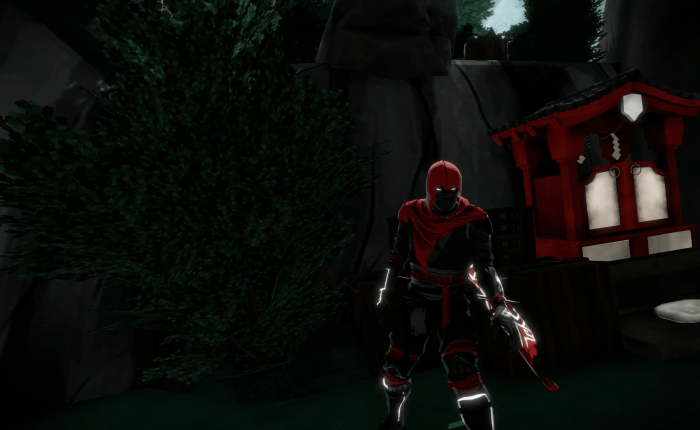
Now I’m into the normal game, and it looks absolutely beautiful. The environment, the main character, everything looks stylized and yet realistic at the same time.

The game drops me right into it and quickly walks through teaching me how to use my abilities. The game also teaches me about being in shadow and to avoid the light.

The way they shows me what buttons to use is really neat. There are giant tablets in the world that have the instructions written on them. Surprisingly, it feels quite natural.

The audio is interesting. The dialogue is in, I think, Japanese but it’s run through an audio filter so it sounds a little like characters are talking underwater. It reminds me of Okami. Of course there’s a lot about this game that reminds me of Okami, which I can only think is a good thing.

I finally got caught out, and discovered that not only do I die in a hit, but the soldiers with swords can use them to fire a wave of light to hit me from range.

After a little more trial and error, I found that once spotted I have a second or two to respond before an enemy either kills me or blows a horn to summon reinforcements.

Story

The character Aragami is a conjured shadow of vengence meant to exact death to the enemies of the princess and to free her from her confinement. One interesting thing about this setup is it completely bypasses the discussion about the morality of killing people. You were summoned to kill the Kaiho, the army of light, and so that is what you’re going to do. The story does go much deeper as you progress, but if I try to describe it then I’ll end up spoiling it.

The reversal of light and dark is also interesting since you are the creature of shadow and your enemies are the army of light. Even the gameplay supports this since shadows are good and light is bad.

Interface

Aragami is a beautiful game, and part of that is the lack of a UI for most of the game. Rather than have a HUD, the designers placed everything the player needs to know on Aragami’s cape, similar to Dead Space. For the most part this works well, though occasionally I had trouble seeing how many special ability charges I had whenever the cape got twisted up.

I wish the camera didn’t auto-rotate to point towards the objective when I push C to have Korasu show me the objectives. Often times I would bring up the indicators so that I could look for ability scrolls, which meant I first had to drag the camera away from the goal marker before I could look around me. They need to add the ability to toggle the auto-rotate off in the options menu.

I like that each of the special abilities has its own charges. This encourages players to make use of the more unique abilities since if they don’t then the charges will simply go to waste.

I found it strange that the game uses (at least on the computer) E for special and F for use. In most other games E is the use key and F is the special key (or melee key in most shooters). A number of times I found myself hitting E to use something, then had to take a moment to remember that F is use. Most of the time I had Kunai equipped so mistakenly hitting E didn’t cost me anything. But I could certainly see people wasting a special ability charge by mistake if they’re used to the keys being reversed. Unfortunately there’s no way to remap the controls.

I wish there was a way to know if I killed all of the guards in a level before I leave since that is one of the optional objectives. I ended one of the levels having missed two guards. I missed those last two guards not because I thought they would be too difficult, but simply because I didn’t know that I had passed by them.

Occasionally you’ll get a checkpoint right before a cutscene (instead of right after it), which is odd. But since you can skip cutscenes, it’s really just a minor annoyance.

Gameplay

Aragami is overpowered. The game goes out of its way to give you some insanely powerful abilities. Not only can you teleport around from shadow to shadow, but you can also create shadows almost anywhere and then teleport to that spot. And then there’s all of the other abilities like the kunai which is a ranged instant kill that never misses. Despite this, you are still going to get killed/spotted. The end result is that whenever you do fail, it absolutely feels like your own fault rather than the game doing something cheap. After all, with such powerful abilities, there should be no reason for you to fail. I feel like this is the real secret to the game that makes the gameplay feel so good.

My one big complaint with the game is that there’s aren’t enough checkpoints in the early levels. Each level is divided up into several areas. In a stealth game such as Aragami, each area is like a puzzle. You keep working at it, learning where enemies are, where they patrol, what areas you have access to, the best places to lure enemies to in order to take them out, until eventually you find the right combination of patience and action to solve the puzzle. The problem is, once you solve a puzzle, it becomes far less interesting having to solve it a second time. You would think that there would be a checkpoint after each area, but often you have to clear through two or even three areas before you reach a checkpoint. This can lead to a situation where you clear the first area, only to fail in the second area and thus have to re-clear the first area. Each time you have to re-clear an area, your enjoyment of that area goes down. The most times I had to clear an area was three times (meaning I died twice in the next area), but after the third time I honestly hated the first area since it took a while to clear and wasn’t interesting at all since I already knew exactly how to solve it. I would like to see the developers be a little more liberal with their checkpoints.

I feel like a lot of stealth games do this and yet every time I see it I cannot help but think it is a mistake. That is, they give the character the ability to go invisible. I feel like granting invisibility to players is a poor design decision because it allows them to go into a state where they no longer have to care about anything. The enemies stop being dangerous, players don’t care if they’re out in the open, and all around it undermines the very foundation of the game itself. Aragami is not the only game to fall into this trap. Deus Ex: Mankind Divided did the same thing, and that too I felt was a bad design decision. I tried out the stealth ability in Aragami and felt that it actually subtracted from the gameplay rather than enhanced it. After my test I decided to continue on as if the invisibility special ability didn’t exist, and I think I enjoyed the game more as a result. I personally would like to see this ability get removed completely. Though the designers would need to double check that each mission can be cleared without killing any enemies (one of the optional objectives) without the use of invisibility.

The ability to disappear corpses should be part of the base kit for Aragami. It’s one of those abilities that has such a massive impact on the game it seems like it’s too important to be considered optional. As for the ability itself, I do like that it doesn’t work on the corpses of enemies that die in direct light. It adds an extra bit of strategy to killing. Though once players gain access to the Shadow Kill special ability, they can use that instead since that ability does work in direct light.

Conclusion

You will like this game if you’re a fan of stealth games. The gameplay is solid, the levels are well laid out, and there’s a constant sense of danger as you go (so long as you play without using the invisibility special ability).

You will not like this game if you aren’t very patient and want a game with a lot of action. You spend a lot of time slinking around in the shadows, and if you get killed then you will have to repeat a bit to get back to where you were.

Aragami is an incredibly well made game. I know I’ve said this already but I can’t say enough about how beautiful the game is. The aesthetics make you want to explore the world, while the solid gameplay will make you truly feel like a master assassin. Aragami is one of those games that takes a core idea, stealth assassin, and successfully narrows down the mechanics to deliver a near perfect game.